
What Do We Owe Persia? The forgotten story of more than 115,000 Polish refugees in Iran
Throughout the years 1942-1943, around 115,000 war-exhausted, wrecked Poles were able to lie on the incandescent, golden sand of Pahlawi (today: Bandar-e Anzali). The push to escape the horrors of Siberian reality brought them all the way to Persia, marking the beginning of shared chapter of history.
Since 28th February of 2026, social media have been flooded with reports regarding the attack by the United States and Israel on a weakened Iran, gripped by protests. As the Iranian rial collapsed in December 2025, the streets of what is historically known as Persia became impassable, boiling with demonstrators.
The situation escalated following the exceptionally brutal bombing of a primary school in Minab, southern Iran. Subsequent attacks and the killing of Ayatollah Ali Khamenei, the leader of Iran’s theocratic state, deepened international concern over the situation – including in Poland. But this is not the first time when Poland and Iran shared a chapter of history.
Exodus
Throughout the years 1942-1943, around 115,000 exhausted, wrecked Poles were able to lie on the incandescent, golden sand of Pahlawi (today: Bandar-e Anzali), a port city in the very north of Persia. They carried almost nothing – just the hope of a better life and the relief of having left the Soviet gulags behind. In 1939, the Second World War tore Poland apart between Germany and the USSR. The mass deportations to the USSR began, and many Poles found themselves in far Siberia, terrified, lost, and weak, forced to work in inhumane conditions. Nazi Germany’s sudden attack on the USSR shifted the balance of power, and the United Kingdom saw it as a chance to gain an ally against Hitler. The Sikorski-Majski agreement, signed in the summer of 1941, re-established the Polish-USSR relations and provided the so-called “amnesty” to the Polish prisoners and deported citizens. The flow of information about the newly formed Anders’ Army was deliberately disturbed by the Soviets. Władysław Anders, himself an “amnestied” ex-prisoner in Moscow, was supposed to form the military group and fight alongside the Red Army against the Wehrmacht. For many, especially those whose relatives had joined the Anders’ Army, it was the only chance to escape the forced labour deep in Russia. Despite the fear of the unknown, they wanted to reach for anything that offered a better fate. The information, despite being disturbed, started to reach the lucky ones in the depths of the USSR already in 1941. Free exiles could go wherever they wished – yet only after painstakingly piecing together fragments of information that reached distant Siberia. Poles who hoped to evacuate with Anders’ Army to Iran had to traverse the Central Asian Soviet republics before finally reaching Krasnovodsk (today: Turkmenbashi), where they found themselves among a multitude of others just like them. Although the crowd offered a sense of comfort, almost merging into a single body, it also brought chaos and diseases. In the middle of a typhus outbreak, the evacuation began. While begging for a place on one of the ferries, Poles were warned never to speak of how they had been treated in Russia. The Soviets, who forbade Jews from boarding the ships, confiscated whatever bundles and money they had managed to bring. Most of them had Palestine as their destination, seeing Iran merely as a point of transit. The journey lasted nearly three days and took a deadly toll; not everyone would reach Pahlavi. In the spring of 1942, exhausted Poles collapsed onto the sand, where Iranians organising aid welcomed hem with sandwiches, sweets, and fruit. The locals washed the newcomers, dirty and weak, hoping to also wash away the mark of the tragic journey that had only just opened a new chapter in the Poles’ experiences in Persia.
Poland on Persian Soil
The flames of the fire consumed the foul-smelling, dirty clothes, while those children who still had the strength ran around the newly built camp and jumped into the Caspian Sea to cool off in the hot summer days of 1942. The sudden arrival of Poles in Pahlavi created a new “town” by the shore – but soon that had to end with the preparation of transports to better-equipped camps across Iran, mostly in Tehran, Isfahan, Mashhad, and Anzali.
Civilians were under the care of the Polish government-in-exile in London, which organised its delegations across Persia. At first, the airport tarmac turned into a classroom. The first gathering on the Tehran airfield took place almost immediately after the Poles arrived in the city, and within a few weeks, it transformed into a functioning school. It was necessary, after all, to eradicate the Russian accent, to teach about the great figures of Poland, and to prepare a new generation to rebuild the post-war state in the future. The British rapidly organised camps; in the first of them, however, Poles slept on bare ground in the building of an old factory. Still, Polish women did not wait long before beginning work. Sewing workshops in the civilian camps operated efficiently, and seamstresses made coats, dresses, children’s clothes, nightwear, and work garments. For many of the newly arrived from the USSR, these were the only clothes they could receive to change into after the rags that still bore the memory of the Siberian cold.
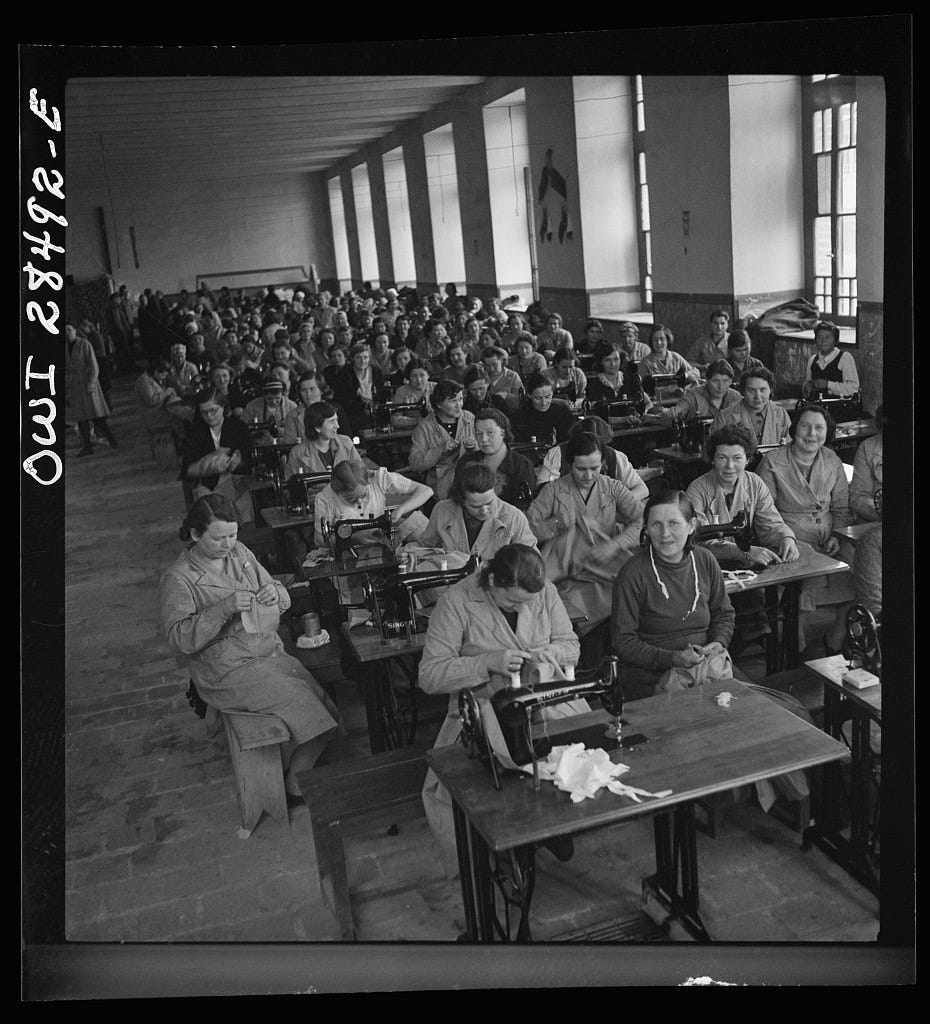
Iran, then under the influence of Great Britain, the United States, and the USSR, was itself suffering from food shortages. Yet the Allies required supplies from a country that had initially sought to remain neutral. Resentment caused by inflation and the presence of foreign Allied troops on Iranian territory, combined with the sudden arrival of unfamiliar newcomers from distant Poland, made some locals uneasy and worried, culminating in deadly protests at the end of 1942. In order to integrate Poles faster into the Iranian economy, from 1943 onward, increasing numbers of them were granted permission to work independently and to live in the city. The employment some of them found – in international corporations, hospitals, restaurants, hotels, and bookstores – was no accident. Just two or three years earlier, they had been part of Poland’s elite – its intelligentsia. Now, after surviving the gulags, they were slowly beginning to rebuild Polish cultural life in exile.
“Dear ones, come to love the Persian land – be grateful for its hospitality and respect the goodwill of its hosts, but above all love your own homeland, the one that now lives in the dreams of all our hearts and minds”, wrote Irena Zawadzka in the August 1942 issue of the newspaper Polak w Iranie (“A Pole in Iran”).
Compatriots who published this newspaper from the time of their arrival in Persia until 1944 cultivated Polish identity, nurtured national longing, and emphasised gratitude toward the Iranian people who, despite being unprepared to receive the refugees, made every effort to accommodate and care for them. Gazetka dla Dzieci (‘Little Newspaper for Children’), attached to Polak w Iranie, helped the youngest learn the Polish language. Wanda, Gerda, Halina, Krystyna, and Ewa – their stories preserved in Karolina Rodacka’s “Domy na Piasku” – remembered that at first they studied while sitting on rocks; later, they were able to move on to school benches made of bricks. Children not only learned about Polish culture in the newly established schools, but also through scouting groups that formed organically within the civilian camps. Many of the young, however, had little opportunity to play with others – they were deeply affected by the journey, ill, and exhausted. The climate of the former capital of Persia was expected to help them adapt more easily. Shortly after the children were moved there, Isfahan began to be called the “City of Polish Children”. More than two thousand young ones passed through Persia’s former capital, mostly through one of the biggest orphanages that operated there. The Polish children of Isfahan also had the opportunity to meet Shah Mohammad Reza Pahlavi and his wife, Queen Fawzia bint Fu’ad, there in 1943. Little ones were able to read out speeches prepared in advance in Polish and speak with the royal couple, just so that later they would be questioned by their peers from the camps about the details of the meeting.
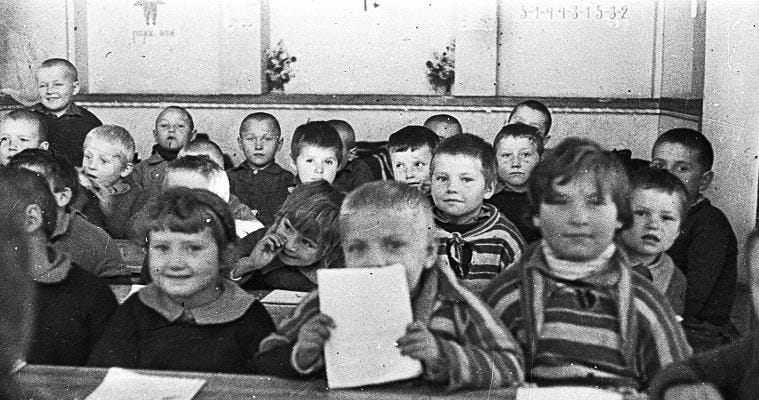
But that was a constant mix of glimpses of happiness and safety with suffering and fear. Polish nurses who found work in Tehran’s hospitals would recall the protruding bones of Poles arriving from the territories of the USSR and the omnipresence of death. The search for loved ones through hospital wards, and the deaths not only of the elderly or the exhausted and sick, but also of children, were part of an ordinary day at work. Many of them were laid to rest in the so-called Polish cemeteries, such as those in Tehran and Anzali, where to this day descendants continue to search for the graves of those who did not survive the exhausting journey to a safe Iran. Yet life in exile was never only about survival; it was also, stubbornly, about living.
After obtaining permits from the British authorities, the Polish government-in-exile, the Iranian immigration office, and Iran’s Ministries of Health and Labour, Mr. Rijahi was finally able to open the restaurant Cafe Polonia in Tehran. It was one of many establishments staffed by Poles. Those working there were educated individuals, often fluent in several languages, with careers at Oxford or in teaching literature and history. Over the following months, however, they would divide their lives between the luxury of the restaurant and the camp in the Douchan Tappe district. The Poles did not limit their cultural activities to cuisine-related establishments – musical bands such as Polish Parade and Jolly Boys enlivened Tehran’s warm evenings. The Shah himself, together with his first wife, would also sway to Polish music when the bands performed at their residences on the outskirts of Tehran. For many Poles, Iran became a place where they could begin to rebuild their national, cultural, social, and individual identities. It was not uncommon to see Polish women flirting with British soldiers. Some also married Iranians and remained in Persia, such as Helena Stelmach, who told Al Jazeera her story. Stelmach met Mohammad Ali in Tehran, where she gave him English lessons. Despite the broader trend of returning to the homeland after the war, she chose to remain in Iran, although such cases were relatively rare.
The Evacuation Commission knew that Persia was only a stop in the broader evacuation of Poles. The first ships to Tanganyika and Uganda, then under British rule, set sail as early as the summer of 1942. Yet, it was the years of 1944 and 1945 that became the time of hurried packing of suitcases heavier than when they had first arrived, and of long journeys, often beginning in southern Iran, where Poles travelled from their camps by bus, truck, and train. Soon, they would reach India, Mexico, Canada, New Zealand, or Lebanon – while Polish Jews, including many children, made their way to Palestine. Many of them had no place to return to after the war – their houses and cities were incorporated into the USSR, and the communist Poland had nothing to offer them. The words of Chaplain Fr. Władysław Słapa were a source of comfort for many Poles passing through Iran between 1942 and 1945. Iran became for them the first place of safety, refuge, and relative calm amid the chaos and brutality of war.
“May the warm wind of hospitable Persia quickly dry these pearls of tears, and may it kindle in our hearts an undimmed flame of great love, awaken the spirit, give rise to strength and resilience – and together we shall begin the Great March back to our homeland.”
by Zofia Korbel