
A Polish Queen in the Roman Capitol: Exhibition on Polish-Italian Shared Heritage
Last year, Polish and Italian heritage crossed paths on the Roman Capitoline Hill, reviving a shared point in history through an exhibition on Maria Casimira d’Arquien Sobieska (1641-1716).
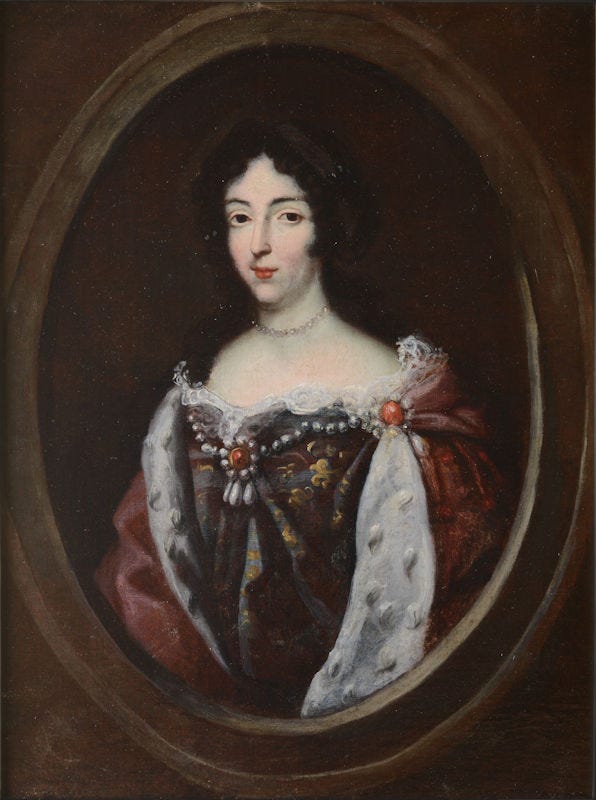
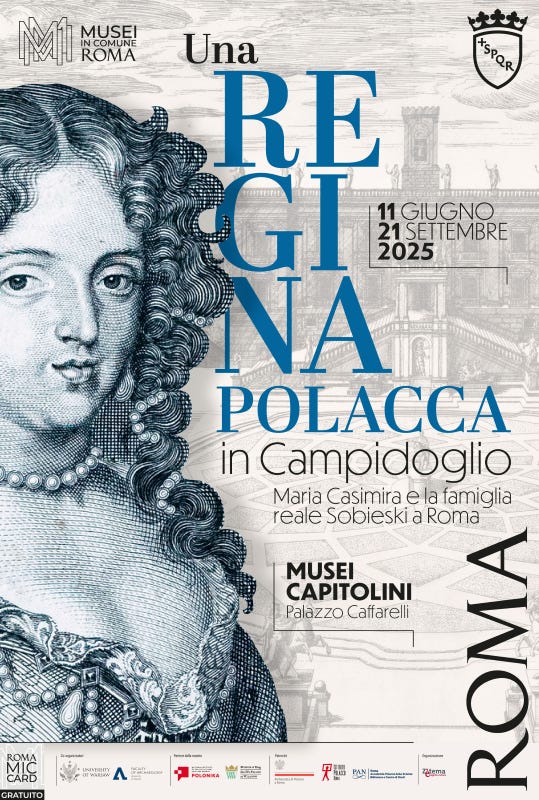
Last year, Polish and Italian heritage crossed paths on the Roman Capitoline Hill, reviving a shared point in history through an exhibition on Maria Casimira d’Arquien Sobieska (1641-1716). Sobieska was a French woman and the great love of John Sobieski, whom she married in 1665. As in 1676 he was elected king of Poland, she was then crowned the Polish queen, known as Marysieńka. From June 11th to September 21st, 2025, the Capitoline Museums hosted a temporary exhibition, Una Regina polacca in Campidoglio: Maria Casimira e la famiglia reale Sobieski a Roma [A Polish queen in the Capitol: Maria Casimira and the Sobieski royal family in Rome]. The museum offered a glimpse into the story of the Polish queen, highlighting her role as an influential art patron in the Italian cultural scene. By following her traces in the city of Rome, we may observe how art collapses time and space. Cultures and individual experiences unfold throughout history, as heritage is built on narratives. The Capitoline Museums act on addressing what history might have omitted, starting with the Polish royalty residing in the heart of Italy.
It was the first in a new series of exhibitions titled “Campidoglio crossroads of cultures” (Campidoglio crocevia di culture). The project is dedicated to figures and international events, which over the centuries have left their imprints on the Capitoline Hill, the Roman symbolic site. Five dozen works of art, involving paintings, letters, sculpture and more, were gathered from Rome, Poland and beyond, to revive generations of the Polish royal family in the Eternal City. The curatorial work was carried out by experts in the art and history of Poland and Italy: Francesca Ceci (Director of the Capitoline Museums and official of Sovrintendenza Beni Culturali di Roma Capitale), Jerzy Miziołek (Director of the National Museum in Warsaw), and Francesca De Caprio (Professor and researcher of Eastern European History).
Highlighting the Polish Royal Elegance
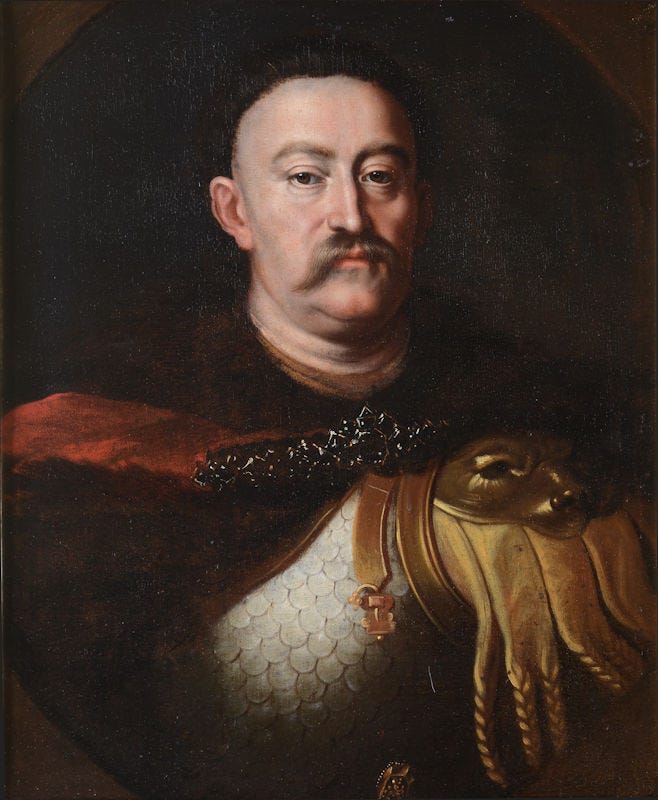
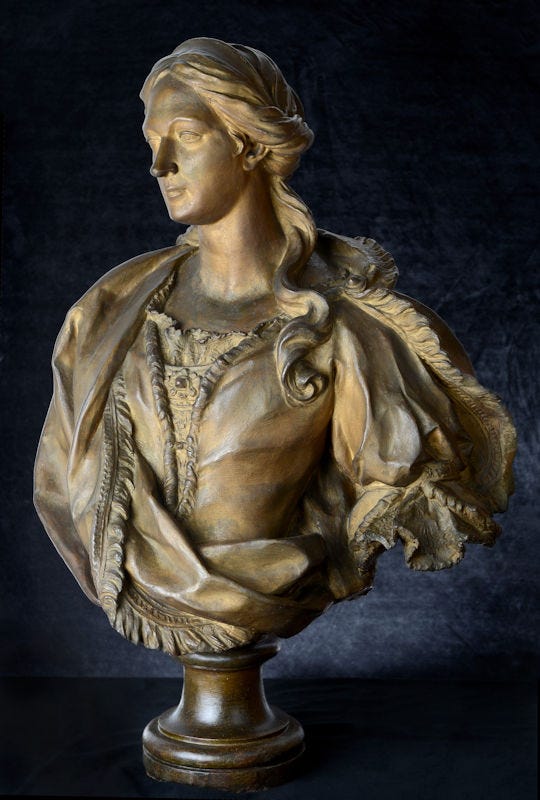
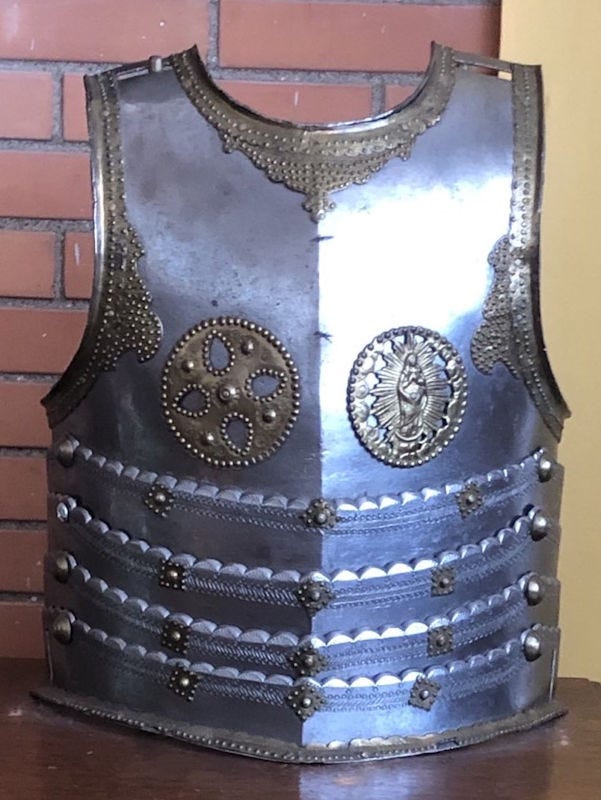
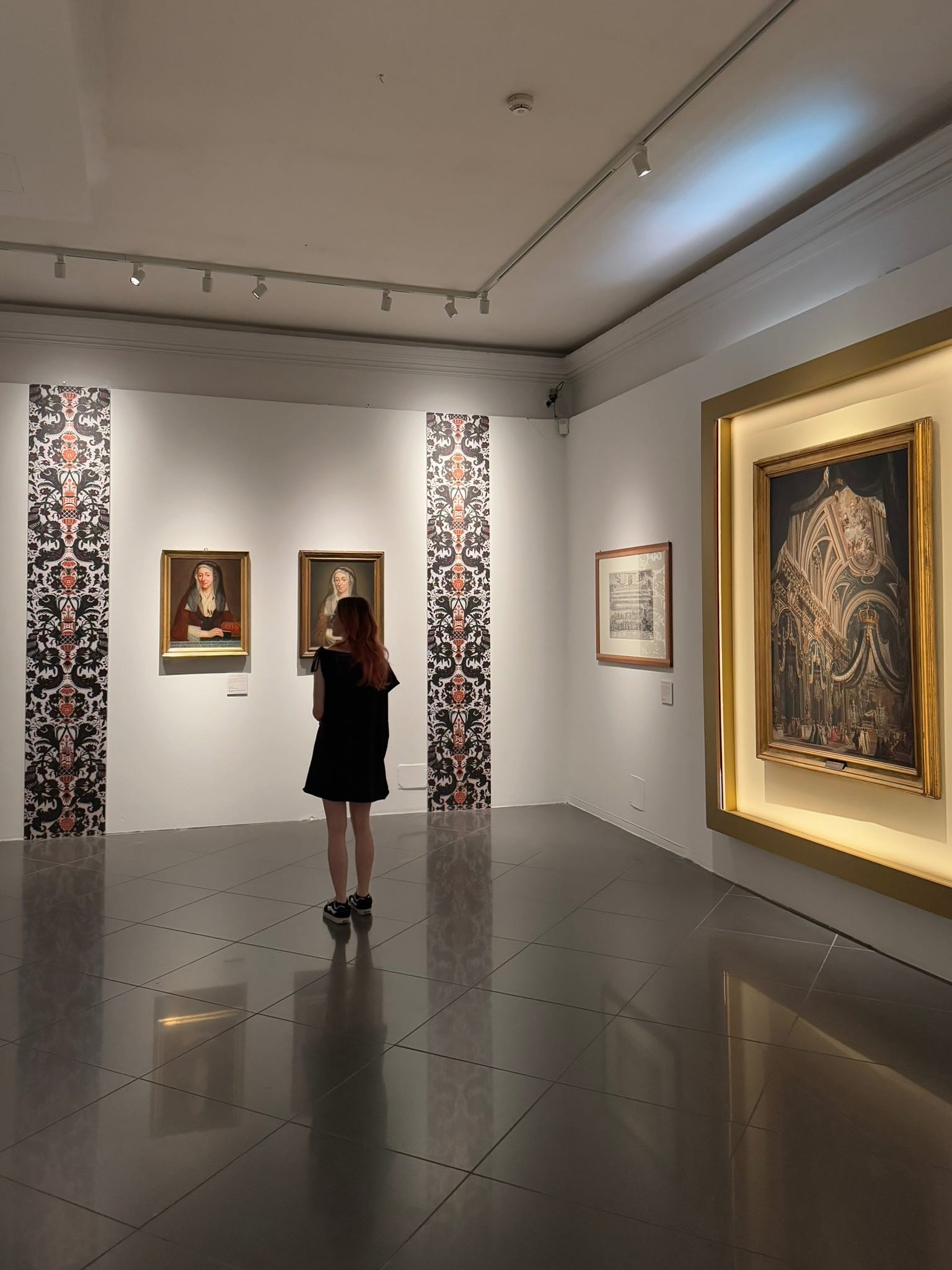
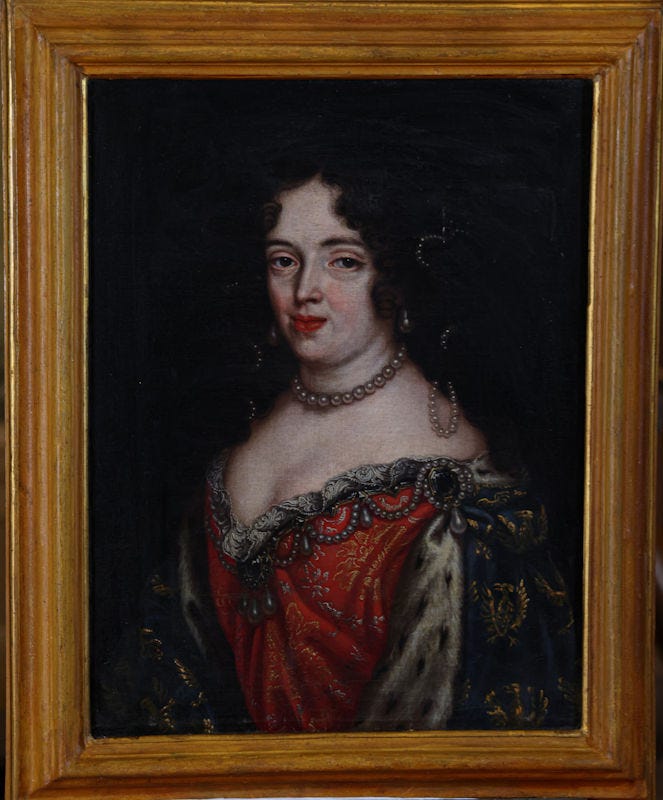
Portraits of Maria Casimira d’Arquien Sobieska, her husband and descendants, created by anonymous baroque painters, decorated the rooms on the museum’s third floor. The works form a narration, which departs from the queen’s arrival in Rome in 1699, 16 years after King John III Sobieski’s victory in the Battle of Vienna. Maria Casimira spent 15 years in the Italian capital. The broad selection of artifacts, loaned from Roman and Warsaw collections, revives the celebration of the Sobieski name in this city. Letters exchanged between Maria Casimira and artists were gathered from museums across Rome, alongside visual depictions of her descendants’ funerals. The bronze plaster bust of Maria Clementina Sobieska Stuart, the granddaughter of Maria Casimira d’Arquien Sobieska, was exhibited for the first time. Among key pieces from Poland, a bust of Hussar armor, presumably used in the Battle of Vienna, was displayed.
In white rooms subtly embellished with red and dark blue decorative designs, portraits were displayed in wooden and golden frames. One element worth attention was the particular way of lighting the display. Several paintings had the passe-partout illuminated with delicate, warm light, highlighting key pieces. Simultaneously, the light maintained a cozy atmosphere in the quite dim rooms of the museum. The experience was enriched by musical dramas, originally written for the granddaughter of the protagonist, Queen Maria Clementina, and reconstructed by Ewa Anna Augustynowicz’s ensemble Giardino di Delizie adding an element of royal sophistication. With objects exhibited with sufficient space in between, they were able to represent themselves independently as singular artifacts of history, all the while maintaining harmony with the exhibition as a whole. The curation reflected simplicity, a cozy haven, and royal elegance.
A female figure Representing a Shared Heritage
The Capitoline Hill conserves centuries of political and sacred significance. In the 6th century BC, the temple of Jupiter Optimus Maximus was erected to clear the space of any previous deities. During archaeological works preceding the foundation of the temple, a human head was discovered in the Capitoline soil, defining the space as the centre of the world – caput mundi. After two centuries, at the top of the hill arose a temple of Juno Moneta. In the Imperial times, Emperor Augustus received a vision of the coming of Christ, and the orientation of the Capitoline Hill was shifted to Christianity with the altar of Ara Coeli. The origins of the Capitoline Museums can be traced to 1734, when the splendid collection of papal donations was displayed and opened to the public, becoming the first public museum in Europe. It is archaeology, numerous monuments, and literary narratives – history books, testimonies, and legends – that testify for Rome being called the centre of Western European culture, the world and even human civilisation.
Hereby, a piece of Polish history is being displayed in the oldest museum in Europe, among the finest European artworks – The Capitoline She-wolf, the Equestrian Statue of Marcus Aurelius, Spinario, Bernini’s sculptures, and more. Through the cooperation between Polish and Italian institutions, including the University of Warsaw, the Royal Castle in Warsaw, numerous libraries, and private collectors, the historical ties and shared heritage between the two nations are cherished. Mentioning the Polish queen holds significance for the Polish national heritage, international visibility, and the field of art curatorship as well. This exhibition portrays John Sobieski’s victory in Vienna as a point of international cooperation in baroque military history, and his individual success, which brought a wide recognition to him and his family for generations to come.
However, the Polish active participation in constructing the history of Europe was also exercised in the artistic field. The story of Maria Casimira d’Arquien Sobieska, presented in the Capitoline Museums, extends beyond her roles as a wife and a queen. Reading the exhibition panels, the visitor can get an accurate picture of the life led by an 18th-century aristocratic woman. Maria Casimira was widely involved in the art scene of Rome. She was the first woman to become a member of the Academy of Arcadia, a literary academy dedicated to Greek and Roman pastoral poetry. This exhibition did not present Maria Casimira in the shadow of her husband, but rather painted a picture of her life among the Baroque Roman artistic and intellectual community. The choice of a female protagonist in the first edition of the exhibition project “Campidoglio crossroads of cultures” reflects the Capitoline Museums’ inclination to fill in the gaps of history and celebrate the female figures as subjects of cross-cultural events.
Travelling Through an Oil Painting
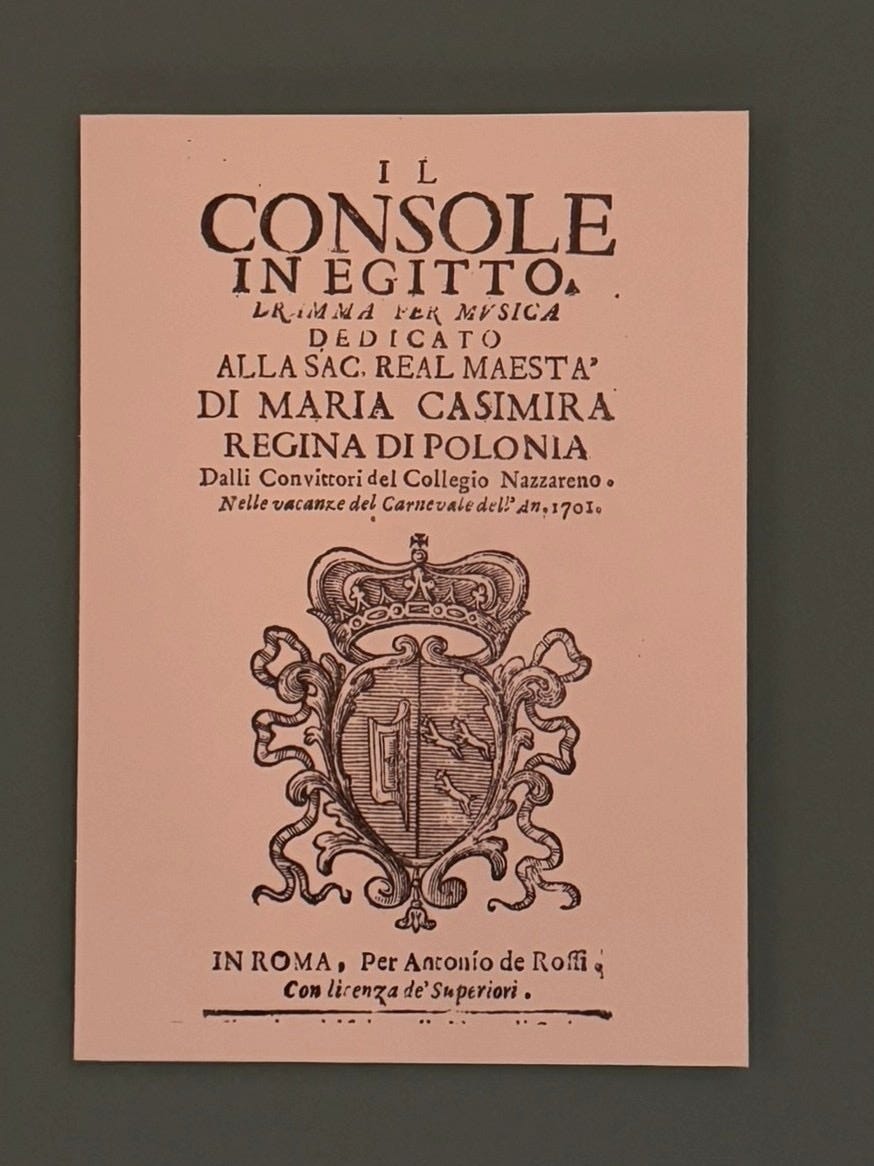
Besides presenting an impressive archive of a generation through direct visual, sculptural, and paper representations, the exhibition Una Regina polacca in Campidoglio aptly refers to significant places for the Sobieski family. From 1702 to 1714, Maria Casimira lived in the Palazzo Zuccari, where she established a residency for artists and a small theatre. There she hosted renowned composers who performed dramas and librettos written specifically for the Sobieski family.
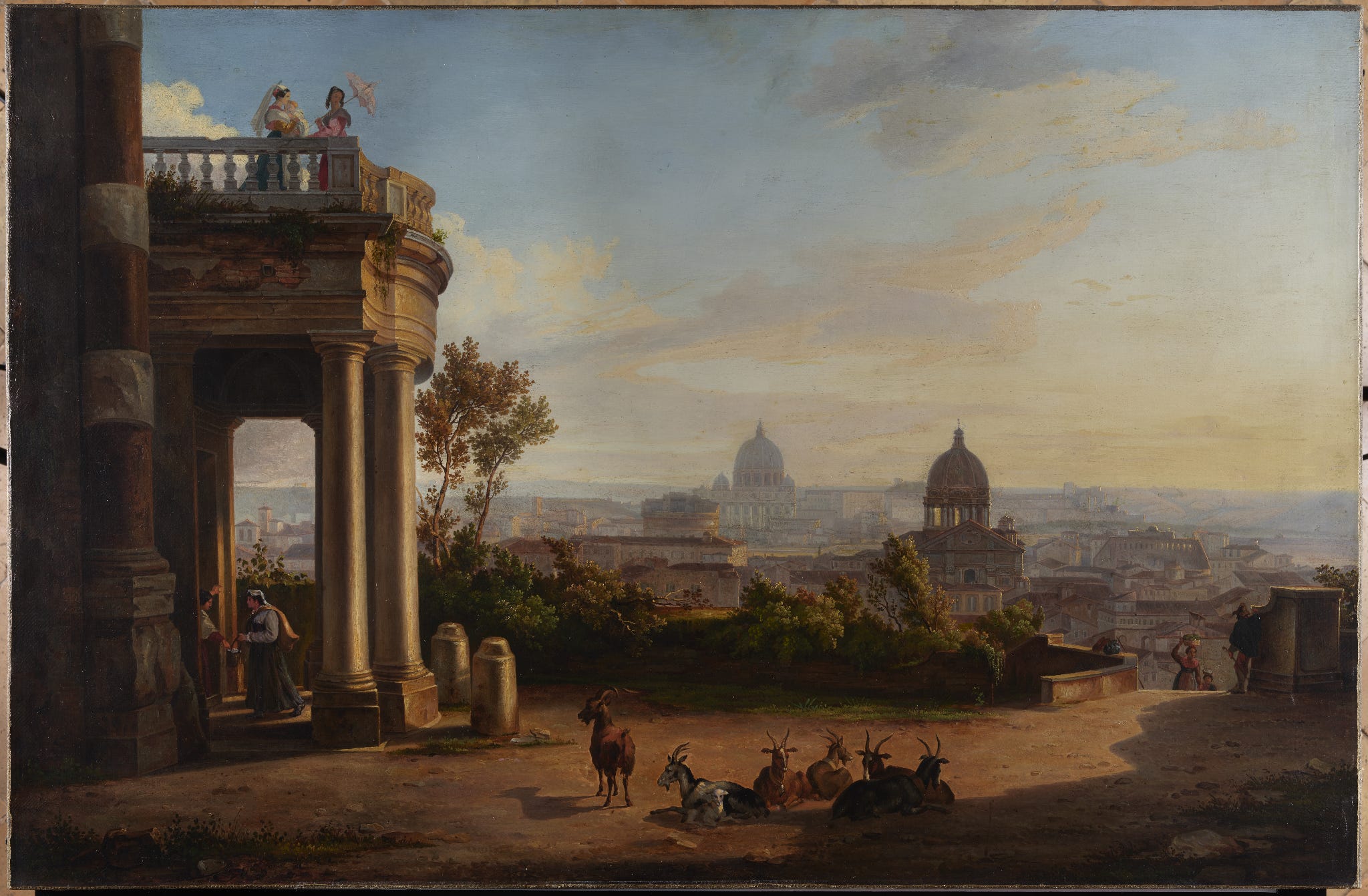
Palazzo Zuccari currently houses Biblioteca Hertziana – an art history research institute. To draw a connection to the place, the Capitoline Museums loaned from Biblioteca Hertziana the oil painting View of Rome, attributed to John Newbott (1840). The painting depicts a sunset landscape spreading between Palazzo Zuccari and the Spanish Steps. Displayed among the Sobieskis’ artifacts, it added another layer of depth to my personal reception of the exhibition Una Regina polacca in Campidoglio, and drew yet another connection to the Polish Queen’s life in the city.
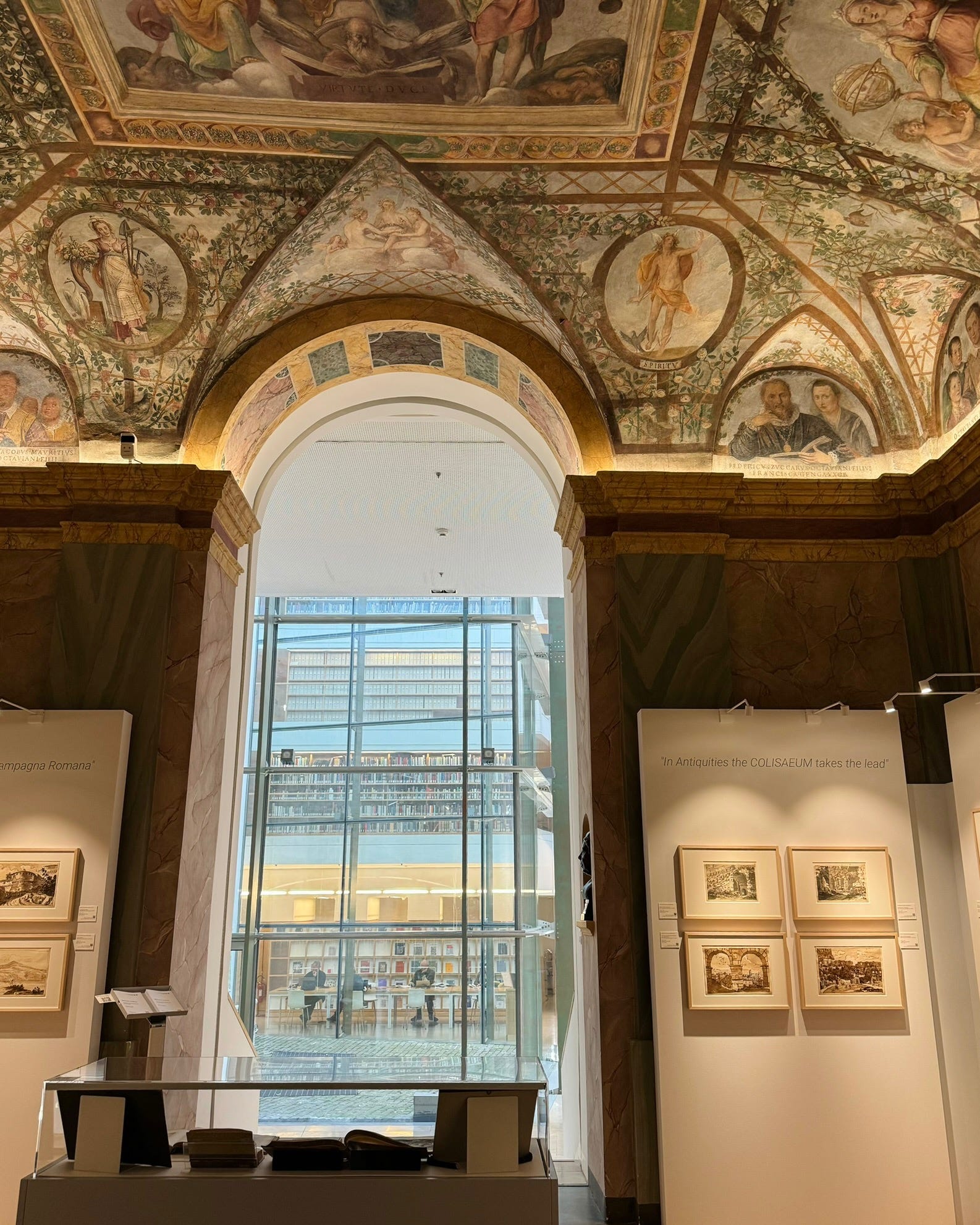
I had the pleasure of admiring Newbott’s View of Rome a few months prior, within the walls of the Palazzo Zuccari itself. The oil painting was then featured in the research exhibition Memories of Rome – Drawings as Souvenirs from around 1800, curated at the Biblioteca Hertziana by Dr Johannes Röll. I was struck by the feeling of romantic contemplation evoked by the pastel sky and golden sunset illuminating the palazzo on Newbott’s canvas. That warm landscape on display corresponded well with frescoes decorating the interior of Palazzo Zuccari.
The oil painting of the View of Rome brought both experiences together as it instantly evoked the memory of stepping into the former home of Maria Casimira and learning art history from dedicated scholars. The collision of memories provided a hypothetical glimpse into the queen’s art community – as to the present day, Palazzo Zuccari remains a haven for art and history, willing to educate rising experts in the field.
Reviving Shared Heritage, Building International Bridges
The exhibition Una Regina polacca in Campidoglio is a result of international cooperation on research and representation of heritage in a broad sense. In 2025, Polish and Italian academic and institutional partnerships allowed the public to enter the court of Maria Casimira d’Arquien Sobieska in the Roman Capitol. A range of experts in art and history prepared an excellent collection of objects commemorating the presence of the Sobieski family in Rome. The Polish royal elegance was reflected in a relatively simple curation, with intriguing use of light and music, making it innovative yet sophisticated.
Maria Casimira was presented with her individual story of art patronage. She was not only the first woman in the Arcadia Academy but also the first (and female) subject of the Capitoline Museums’ new cross-cultural project. It shows that contemporary curating in Europe leans into presenting herstories of historical figures, unveiling what is omitted in history books. Studying women as subjects rather than objects contributes to the discourse of narratives which construct a sense of greatness.
Loaning an artwork from another location is a brilliant way of making a connection. It can serve as a bridge between the subject and the place. When admiring a painting, the visitor bonds with it as well. Distant countries and timelines collide in a piece of art and the variety of contexts around it. The Eternal City holds centuries of individual stories from the crossroads of cultures. We can still learn a lot from places once inhabited by the Polish queen and her view of Rome.
by Iga Dymek