
InPost Is Not The Ugly Duckling Anymore
The InPost we know today grew out of Rafał Brzoska’s first company integer.pl which, founded in 1999, was dedicated to leaflet distribution.
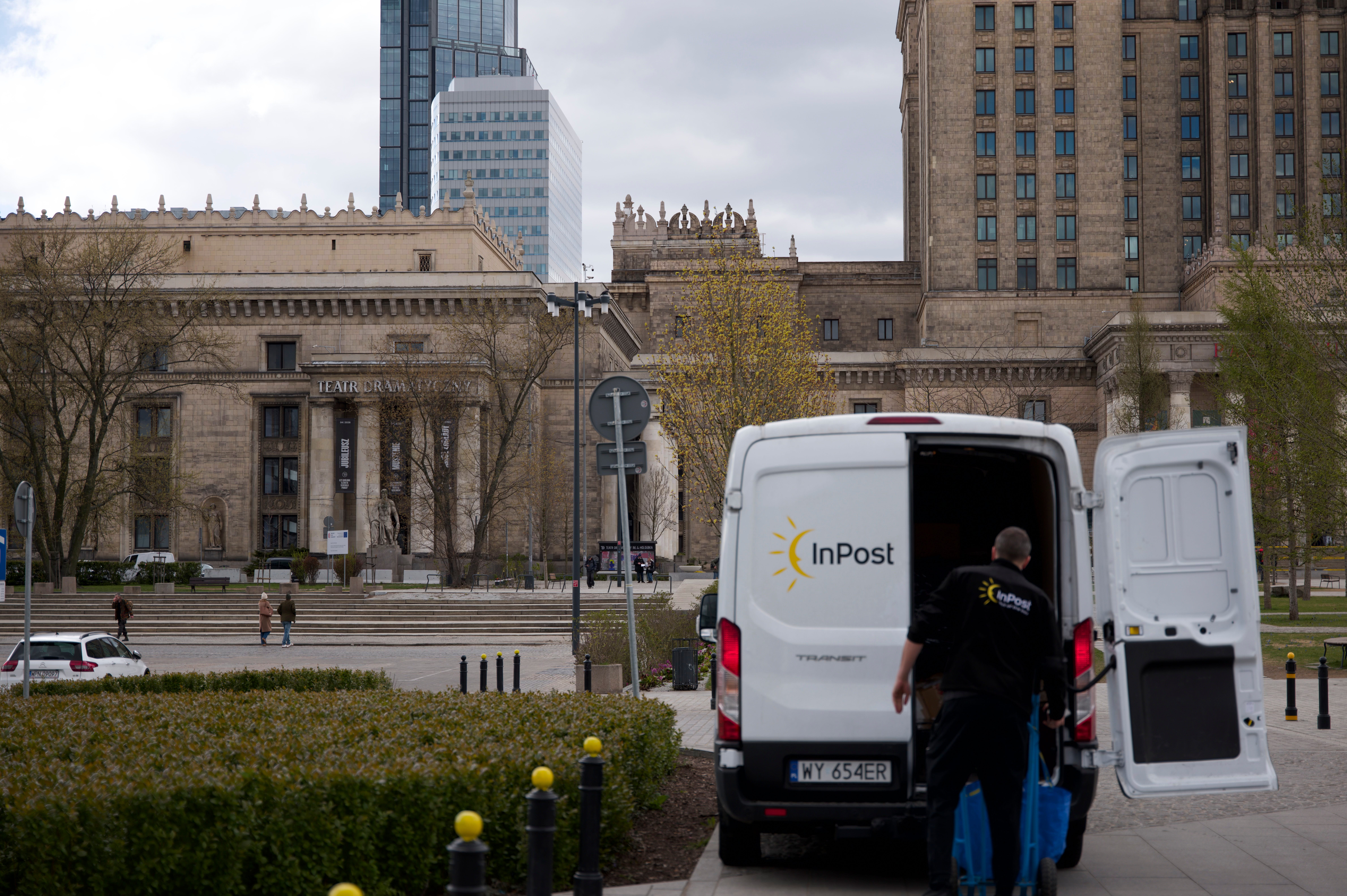
The InPost we know today grew out of Rafał Brzoska’s first company integer.pl which, founded in 1999, was dedicated to leaflet distribution. InPost was incorporated in 2006 to challenge the monopoly of state-owned Polish Post. At the time, regulations granted the Polish Post exclusive rights to distribution of letters under 50g, which InPost circumvented by adding 50g metal weights to each letter. In years to come, InPost continued to innovate by being the first company to add internet-based parcel tracking, and eventually, in 2009, rolling out the first Paczkomat (Automated Parcel Machine or APM). Till end of 2021, InPost built over 16,000 APMs in Poland and established a dominant position in the market. In the same year, the company made the bold decision to export this business model abroad, and started growth in France through the €513m acquisition of French out-of-home delivery provider Mondial Relay with approximately 16,000 Pick-Up-Drop-Off points (PUDOs) across France. In the background, this growth story was underpinned by lots of volatility; in 2015 InPost was listed on the Polish Stock Exchange (GPW), but after poor company and stock price performance it was taken private by a private equity firm Advent International in 2018. Just three years later Advent re-listed InPost on the Euronext Amsterdam, raising ~€3.9bn. After the second IPO growth accelerated. Between 2021 and 2025, parcel volume grew 22% annually, while the Polish and International APM networks grew 11% and 37% per year respectively. As of today, InPost handles an astonishing 70% of Poland’s parcel volume and is in the pivotal stage of its international expansion, which we believe is proving more costly than Mr. Market expected. InPost’s presence on the Euronext has been volatile and the stock traded 2025 at a 50% discount to the IPO listing price just recently.
In Poland, 90% of urban and 65% of total population have a Paczkomat within a 7 min walking distance — that’s 25 million people
Against this backdrop comes an unprecedented vote of confidence in the company’s trajectory. A consortium consisting of the long-term shareholder Advent International, Czech private equity fund PPF, the American delivery giant FedEx, and Rafał Brzoska’s family office A&R, offered €15.60 per share (50% premium to 6month average share price) to delist InPost and continue the growth trajectory as a privately held company. While the offer seems generous, it is below InPost’s IPO valuation of €16.00. At the same time, the CEO, and a 12% shareholder, bids to increase his stake from the current 12% to 16% without any capital investment. Meanwhile, retail investors are left in the dust and forced out of the long-term trajectory of the firm. The offer is a good prompt to discuss the value of what I believe is a great company and the sad end of story for minority shareholders who believed from day one.
Why InPost is a Great Business
InPost has what Warren Buffet popularised as a “moat”; it holds significant and sustainable competitive advantage in the Polish market. Since its relisting in Amsterdam, InPost spend almost PLN 8bn on Capital Expenditures and Acquisitions to build its current APM network. With over 30,000 pickup points just in Poland, 90% of urban and 65% of Poland’s total population have a Paczkomnat within 7 min walking distance from their homes; that’s 25mm people. This effect of scale creates tremendous barriers to entry. But large investment by itself doesn’t mean the model is scalable and the moat is replicable in new markets. What really makes InPost’s model unique is its reputation and win-win-win relationship with customers, merchants, and it’s own financial health. With an NPS score (world’s most comprehensive customer satisfaction index) of 77 in Poland, and 55 in France, InPost is the #1 rated company by consumer loyalty and satisfaction. That is #1 not just in delivery, but among all companies. This trust and client loyalty is evident in it’s consolidated client base where 20% of most loyal clients account for 70% of volume, making its market position difficult to undermine. The model is scalable due to its convenience – it’s a win for all. For consumers it’s cheaper than standard delivery from DHL or UPS, and pick-up flexibility makes up for lack of last mile delivery. The possibility to choose when to pick-up also eliminates the frustration of failed deliveries. Importantly, using InPost also creates a habit, which is good for consumers routines but also reinforces InPost’s business model. Merchants benefit too. Due to the lack of last mile delivery, InPost’s services are 20-30% cheaper, and the flexibility of APMs reduces failed deliveries, making vendors’ lives easier. Finally, the branding of InPost increases vendor credibility and might drive higher website conversion at checkout. Despite giving away all these benefits, InPost’s model is also advantageous for the company itself. The double flywheel of consumer and merchant satisfaction reinforces its moat. Most importantly, APMs allow for the elimination of the single highest cost of all delivery businesses: the last mile. Think about the day of a UPS and InPost delivery driver. A UPS driver goes house to house, delivering 2 to maybe 5 packages per stop – density is low. For InPost, each delivery means offloading of between 30 and 150 packages at once (Average APM capacity is 140). With say 100-200 stops per day and up to 2 packages per stop, a normal delivery driver can deliver an absolute maximum of 400 packages per day, with the real number probably closer to ~300. At the same time, 7-10 daily stops at APMs with 70% utilisation means up to 1,000 parcels per day, with the real number likely between 700 and 800. This creates significant cost advantages as labour and transportation costs are two largest cost centres in the delivery business. This combination of superior economics and self-reinforcing branding, make InPost’s business model defensible and scalable.
Markets Don’t Like InPost
While InPost has everything it needs to be a dominant business, risks do exist and markets seem to be paying lots of attention to them. First, let’s address the elephant in the room Allegro - Poland’s dominant e-commerce platform. The first cracks in the market’s perception of InPost started back in 2022 when Allegro announced the rollout of their own APMs that currently stand at 7,000 own locations, and 37,000 affiliated locations operated by Orlen, DHL, and DPD. While this wouldn’t be threatening if it was any other player, via a 2020 agreement, InPost is Allegro’s primary delivery provider, and Allegro orders have historically accounted for around 37% of InPost’s total volume in Poland. The contract expires in 2027, and the risk of Allegro dropping InPost and focusing on developing its own APM ecosystem is not unconceivable. With the scale of Allegro’s e-commerce business, I agree that it is a genuine concern. I disagree, however, that it will make or break InPost. Firstly, yes, Allegro drives a large portion of InPost’s volume but this is isolated to Poland, which in 4Q25 represented just about half of the total volume. Just by this token, that 37% of volume is diluted to 19% on group level. Furthermore, the quality of Allegro’s network is worse than that of InPost’s. Many DPD and Allegro APMs are much smaller, often with less than half of the average InPost locker count, which makes for inferior unit economics. Also, InPost’s brand is the polar opposite of Allegro. In the merchant satisfaction surveys Allegro ranks dead last, after all available delivery providers in Poland, and ranks behind AliExpress and DPD among retail users. Finally, on the other side of the volume dependency argument, is the 60% of Allegro’s volume that InPost handles for the company. The main difference, however, is that InPost is now pan-European, and rapidly expanding, while more than 90% of Allegro’s revenue still comes from Poland, meaning that the bargaining imbalance in favour of InPost is significant. Thus, the view that Allegro can just cut InPost off from 30% of it’s Polish volume is farfetched. For Allegro it is not as simple as just removing InPost as a delivery option in their app. Merchants prefer InPost to any other provider, so there’s risk of churn on merchant side. Consumers have developed deep habits of using InPost’s APMs: 16m Poles use the InPost app and prefer InPost to any other delivery provider. Thus, if Allegro were to cut InPost off, it would bear the risk of losing volume on both ends of its business. Finally, InPost has been diversifying it’s reliance on Allegro both by reducing the share of Poland’s volume in the total volume, and reducing the share of Allegro-driven volume in the Poland volume number. As a result, it’s reasonable to predict that by the time contract runs out, InPost’s reliance on Allegro on group level will be significantly lower than it is now. It’s thus easy to imagine that Allegro will be willing to strike a new deal and continue routing part of its deliveries through InPost. Should they decide to not renew the deal, the landing for InPost would still be smoother than markets expect.
A UPS driver delivers ~300 packages per day, compared to InPost’s 700–800
The second problem investors held against InPost was the scale of reinvestment and lack of profitability after the international expansion. True, as they are right now, the international segments are not great. Due to expansion investment the 2025 cash flow was well-below expectations as international investment needs cannibalised most of profits generated in Poland. Safe to say, markets didn’t like it. But the reality is that these investments are needed if investors want to see InPost replicate the polish playbook in new countries. Consider France, for example. When acquired, Monday Relay (core of InPost’s exposure to France) was almost all-PUDOs. PUDOs drive inferior long-term economics. The PUDO model requires payment of a fee to the shop or kiosk for each package handled, which is a variable cost, meaning it scales together with volume. The capital expenditures and lease payments required to set-up and operate an APM are fixed – they don’t scale with volume, so in the long-run, APMs allow for higher margins as the fixed cost is spread across more revenue. Secondly, InPost is not done growing. Every year, lots of costs come from the need to incentivise adoption and spend on increasing network density to enable the value proposition of proximity and flexibility that works so well in Poland. Thus, its unreasonable to expect Poland-like profitability form less mature markets where InPost is still developing its value proposition. Thirdly, most of the international business is still B2C, with people sending packages to one another. The true realisation of InPost’s Polish success will only come will full integration of B2B clients who allow for better route density of couriers and guarantee volume. This of course means more investments in large sorting and distribution centres – even more short-term pain. But in the long-run, this strategy will improve the value proposition and create a more favourable cost structure that will allow InPost to replicate its Polish success.
Apart from the core business which markets seem to be so negative about, InPost’s business has multiple embedded “call options” that are completely unaccounted for in the company’s valuation. Access to a large and loyal customer base and a dense delivery execution network, mean that InPost has the makings of a Pan-European e-commerce player. The company already leverages its strong brand to offer payment processing services to merchants. Recently the company launched an AI shopping agent in its app, which shows that InPost is aware of its e-commerce potential. In the short-term, this even further reinforces InPost’s strength in negotiations with Allegro (Poland’s e-commence incumbent). In the long-run, this optionality goes far beyond Poland and makes InPost positioned to one day be the go-to e-commerce platform in Europe — something like Alibaba or Amazon.
Minority Shareholder’s Nightmare
I speculate that the need for uninterrupted prioritisation of investment and growth initiatives is one of the key rationales for taking InPost private. Without investor pressure and the unnecessary volatility of its stock, In Post will have more space to execute on the expansion. I believe InPost is a great business, and if sophisticated investors are willing to buy it for a price 50% above the current market valuation, and the CEO is increasing his share, it seems to me that there’s some good long-term upside to the €15.60 offer.
Going private will be good for the business, and most certainly a bargain for the investors, but what is effectively happening is that all the upside of InPost’s future is taken away from retail investors. Those who believed in this vision from day one will lose 40 cents per share over a 4 year period; a rather miserable return. Those who saw the opportunity when InPost’s valuation hit all-time lows will get the participation price of +50% after shares jumped on announcement. But the real upside will be realised over the next 3-5 years by private investors who, assuming aggregate profitability converging closer to Poland’s levels than current international levels, can expect to double or triple their money as the dust of the expansion CapEx settles and international networks mature.
by Bruno Matys