
Hôtel Lambert: The First Government in Exile
In the autumn of 1831, a man without a country installed himself in a mansion on the Île Saint-Louis.
In the autumn of 1831, a man without a country installed himself in a mansion on the Île Saint-Louis. Adam Jerzy Czartoryski had just led and lost a national uprising. He was sixty-one years old, wanted by the Russian Tsar, and, by most reasonable measures, finished. He proceeded instead to run one of the most ambitious diplomatic operations of the nineteenth century from a Paris palace. The building was called the Hôtel Lambert. For the next several decades, it was, in everything but name, the foreign ministry of Poland, a state that no longer existed.
Who Was Czartoryski?
Adam Czartoryski was born in 1770 into one of the most powerful families in the Polish-Lithuanian Commonwealth, the kind of magnate clan that owned entire provinces. But the world he was born into was already coming apart. Poland was partitioned by Russia, Prussia, and Austria (which did not take part in the second partition of Poland, being occupied with the war against France) in three stages between 1772 and 1795, when it ceased to exist as a state.
His route to influence ran through St. Petersburg, of all places. His family sent him to the Russian court in the 1790s as something between honored guest and political hostage. There he became genuinely close to Grand Duke Alexander, the future Tsar. The two talked for hours about liberalism, constitutionalism, and the rights of peoples. When Alexander became Tsar in 1801, he made Czartoryski his foreign minister, which remains one of the strangest arrangements in modern European history: a Polish patriot from a nation Russia had just betrayed and removed from the map, directing the foreign policy of the Russian Empire.
Czartoryski used the position where he could, and was instrumental in creating the semi-autonomous Congress Kingdom of Poland in 1815. But Alexander was always more Tsar than reformer, and Czartoryski eventually understood the limits of the relationship. When the November Uprising of 1830-1831 broke out against Russian rule, he was elected head of the national government. The uprising was not successful, so Czartoryski had to escape. He decided to go west and made his way to Paris. Tsar sentenced him to death in absentia and stripped him of his estates.
What he still had was reputation, contacts, and a refusal to accept that the situation was permanent.
How the Hôtel Lambert Worked
Czartoryski leased the Hôtel Lambert in 1843, and it became the fixed address of what we would now call a government in exile, though that concept didn’t really exist yet. He was inventing it.
The operation was genuinely sophisticated. The Polish elite was spread around Europe like never before. Most of them were in Paris with smaller groups and Czartoryski’s special agents in London, Rome, Constantinople, Belgrade, Bucharest, and beyond. Polish officers were placed in foreign armies Papal, Sardinian, Turkish always with contractual clauses allowing them to leave for Polish service when the moment came. The “Literary Circle of Friends of Poland” cultivated British public opinion. In 1845 Czartoryski established an Eastern agency in Constantinople, run by Michał Czajkowski, with branches across the Balkans. Its purpose was to build relationships with Ottoman officials and position Poland as a potential anti-Russian ally in any future conflict over the Straits.
The core strategic premise never changed: Polish independence required a war between the Western constitutional monarchies and the Holy Alliance, especially Russia. Czartoryski’s job was to make that war more likely and ensure Poland was ready when it came.
He also thought seriously about what came after. His vision for a reconstructed Central and Eastern Europe was federal rather than nationalist a voluntary association of free peoples, with Poland as initiator and mediator. He was suspicious of the ethnic nationalism rising across the continent, worried it would turn natural allies against each other. Events kept proving him right about this, though never in time for it to matter.
1848: The Chance That Slipped Away
The revolutions of 1848 were the best opportunity the Hôtel Lambert ever had.
Louis-Philippe fell. Metternich fled Vienna. Berlin was in ferment, with political prisoners walking out of Prussian jails to cheering crowds. Liberal governments across Germany and France were adopting pro-Polish language. The Frankfurt parliament had Polish reconstruction on its agenda. Chancellor Nesselrode was reading his ambassadors’ dispatches with something like panic; one reported that “the fury of Polish enthusiasm has shackled Europe”.
Czartoryski was nearly eighty and had spent two years in depression following the bloody events in Galicia in 1846. He shook it off. In late March he traveled to Berlin with a small staff and worked the diplomatic circuit with everything he had. His appearance in the streets caused crowds to cheer his carriage. The Russian ambassador sent alarmed dispatches to St. Petersburg.
His goal was specific: push Prussia, backed by France and the German liberals, into war with Russia. The timing was good. Russia wasn’t ready to fight. If Prussia moved with Polish brigades as a vanguard, Sweden and Turkey might follow. Prussian Foreign Minister von Arnim, on Czartoryski’s advice, proposed exactly this to the French Foreign Minister Lamartine: a joint military offensive from Poznania directed at Warsaw.
What followed is a case study in how liberal rhetoric and liberal action can come apart entirely.
Lamartine didn’t say no. He deliberated and ran the clock. The French government was full of language about the liberation of peoples, but when asked for actual military commitment, Lamartine was paralyzed by caution. He eventually told a Polish delegation that the fate of Poland depended on the goodwill of Nicholas I, with whom he planned to open negotiations. The Polish Legion got travel money but no weapons.
Britain was worse. Palmerston had decided that a manageable Russia was more useful than a destabilized Eastern Europe. His ambassador in Berlin played for time. Stratford Canning, the same diplomat who seven years later pushed Britain into the Crimean War against Russia in defense of Turkey saw exactly what Czartoryski was building and quietly worked to prevent it.
Frederick William IV of Prussia made his decision by not making one. He privately begged British diplomats to urge his own cabinet to drop the plan for a Polish army. He promised autonomy publicly while preparing the dismissal of von Arnim. By June the revolutionary atmosphere had cooled and he returned, with evident relief, to dependence on St. Petersburg.
The Frankfurt parliament voted 331 to 101 against supporting the Polish cause. The Poznania rising was suppressed. Polish military camps were disarmed. Windischgrätz bombarded Cracow. Czartoryski returned to Paris with his illusions about France and Britain extinguished.
He kept trying. Polish generals Bern and Dembinski were winning real successes for Kossuth’s Hungarian revolution, and Czartoryski pushed for a Polish-Hungarian-South Slav federation. Kossuth resisted; he rated Magyar prospects too highly and suspected Czartoryski of being biased toward the Slavs. In August 1849 the Russian expedition under Pashkievitch crushed Hungary and it was over.
He was nearly eighty, had spent thirty years in exile, and was still reasoning carefully about who had an interest in helping Poland and why they weren’t.
What the Hôtel Lambert Actually Achieved
Given the decades of failure, the temptation is to write the whole enterprise off. That would be a mistake.
The clearest success was keeping the Polish question in European consciousness for forty years. Partitioned nations fade; the powers that absorbed them have every reason to treat the absorption as settled. Czartoryski’s network of agents and publicists meant that Polish affairs kept surfacing in Western cabinets, that every major diplomatic crisis had a Polish dimension clearly articulated. When the Crimean War came, the Hôtel Lambert was positioned to press for Polish interests. The Congress of Paris in 1856 didn’t produce independence, but it produced a formal international discussion of the Polish question, something that wouldn’t have happened without decades of lobbying.
The Eastern agency delivered more concretely. Czajkowski built real relationships in Ottoman service. Polish officers organized Balkan and Caucasus irregular forces that complicated Russian operations during the Crimean War. Czajkowski himself ended up commanding a Cossack unit as “Sadyk Pasha” , a strangea strange coda, but a real military contribution.
The Italian policy paid off, if indirectly. Polish officers trained the Papal and Sardinian armies before 1848, and Polish military expertise fed into the Risorgimento. The unification of Italy in 1861 which Czartoryski lived to see was precisely the kind of national liberation he had spent his life arguing was possible and worth supporting.
But the deepest achievement was organizational. Hôtel Lambert invented the government in exile as a working institution with diplomatic representation, intelligence operations, cultivation of foreign publics, and a continuous claim to political legitimacy on behalf of a stateless people. There was no real model for this before Czartoryski built it by necessity. The Polish government in exile that operated from London during World War II was working in a tradition that ran directly back to the Île Saint-Louis. So, in a different way, was the broader European project: Czartoryski’s federalist vision of small and medium nations in voluntary association against great-power domination was a century early but not wrong.
Czartoryski died in 1861, aged ninety-one. He never returned to Poland. The Poland he wanted came in 1918 revived by the great hero - Józef Piłsudski, out of exactly the kind of great European war he had spent decades trying to provoke. He would have found the timing wry.
What prince Czartoryski built was harder to see than a liberated nation but perhaps more durable: proof that a people without a state could still act as a political entity, that exile was not erasure, and that the patient work of keeping a cause visible across decades, through repeated failure, against the indifference of the powerful was itself a form of resistance.
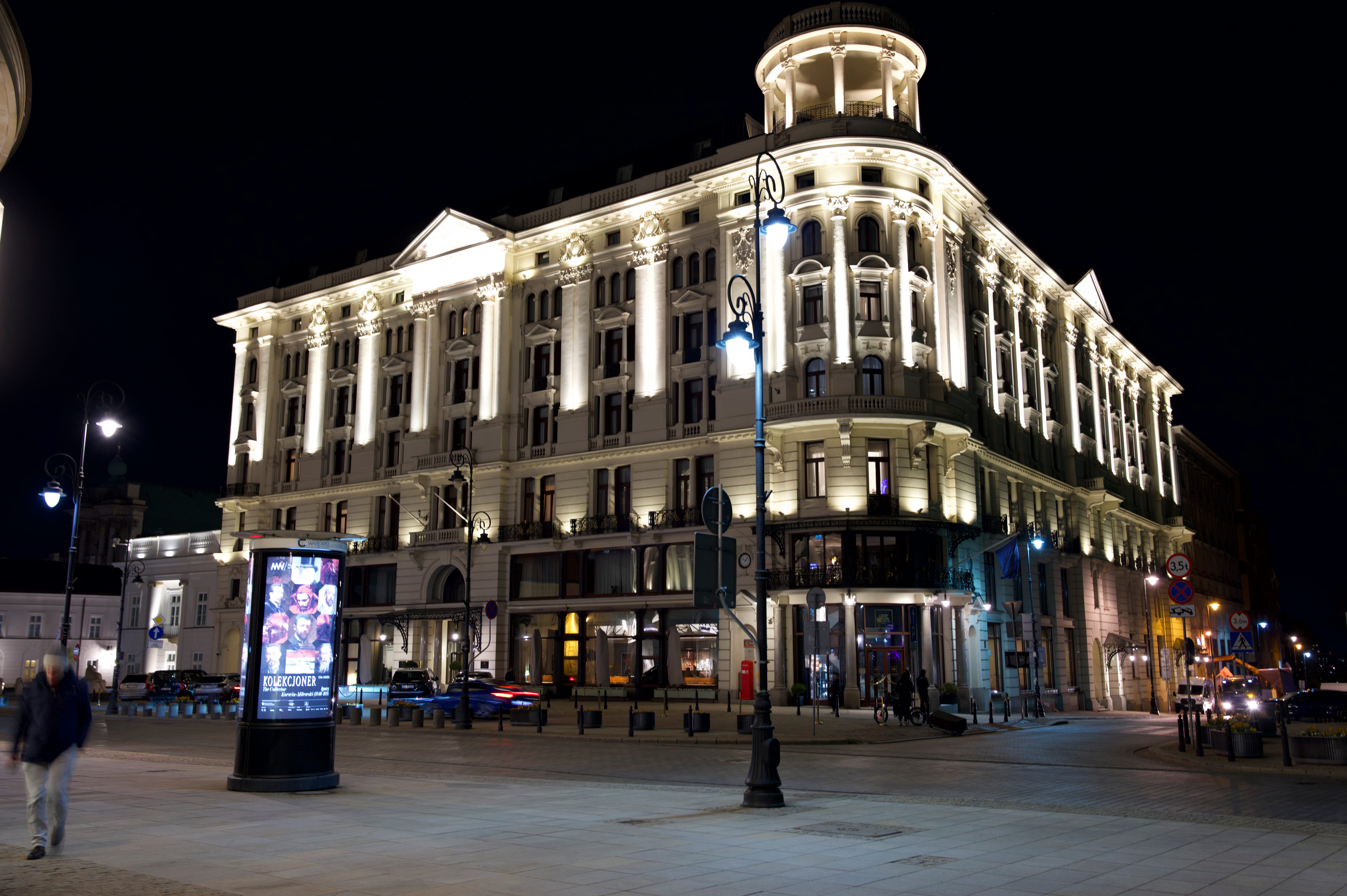
by Wojciech Sowa