
From Unwelcome 'Polacks' To 'Model Migrants'
Shifting Attitudes Towards Polish Immigrants in the UK
On 11 March 2026, The Times published an article titled “Make your move from the UK to Poland” with the subtitle “With a lower cost of living and a booming tech industry, the central European country is calling to many Brits”, symbolically marking a reversal of the traditional direction of the Poland to the United Kingdom migration pipeline. This is in line with a wider narrative shift that can recently be observed about Poland, away from older narratives portraying Poland as a post-communist country struggling to catch up with the West. In May 2025, a cover of The Economist read “The Remarkable Rise of Poland”. This shift in international media’s portrayal of Poland as a country raises questions about national image and attitudes towards migrants. While this new perception of Poland as a rising European power is clear, this article aims to examine whether the attitudes to Polish immigrants living in the UK have been changing alongside it, arguing that while the evidence is not yet definitive, it is likely that in the near future Poland’s growing prestige will allow Polish migrants to rise in the so-called hierarchy of migrants’
The hierarchy of migrants can be understood as “a racial hierarchy in attitudes to migrants” in which Brits “express more openness” towards migrants from certain places and backgrounds over others. Generally, “UK citizens, especially those holding authoritarian values, have been found to prefer immigrants from western Europe and Commonwealth countries compared to those from eastern Europe, Muslim countries and Sub-Saharan Africa” . The fact that migrants from eastern Europe are treated less preferentially than those from western Europe suggests that factors other than race and religion influence positioning within this hierarchy. This article argues that the perceived ‘development’ of the country of origin and the perceived cause of migration (economic necessity vs. lifestyle choice) play an important role. It is in this context that the attitudes to Polish immigrants in the UK will be analysed.
Power of the Media to Shape Public Perception
Evidence from an experiment done by psychologists from the University of Cambridge revealed that “British attitudes to immigrants from Europe can be shifted by relatable messaging”. Showing people a short profile of a fictitious Polish migrant NHS nurse “who valued safety, fairness, duty and hard work” produced a 20-point swing in positivity towards EU immigration among British voters. This example illustrates that even brief positive portrayals of migrants can have a significant effect on public opinion, implying that more positive media narratives can have tangible effects on the experiences of migrants.
There are currently an estimated 700,000 Poles living in the UK (Office of National Statistics, 2021), with Polish being the second most commonly spoken language in many regions of the country (according to the Office for National Statistics). Given these large numbers, Polish migrants’ presence in the UK is a salient issue, one often discussed in the British media. This article will, thus, trace changing media narratives about Polish immigrants in the UK to better understand attitude shifts.
Negative Portrayal in the Past
Following Poland’s accession to the European Union in 2004 hundreds of thousands of Poles relocated to the UK—the number for the 2004–2014 period is estimated at 784,000. Initially, they were portrayed as a ‘desirable’ group, “seen as ‘invisible’ due to their whiteness” and praised by the media for their “hard-working-ness, value for money and diligence”. A 2006 article by The Sunday Times quotes employers’ praises for their Polish employees and states that Poles in the UK “have a reputation for working hard at manual jobs for relatively low wages, despite good qualifications”.
However, around the 2008 financial crisis and in the years preceding the Brexit referendum, the media narrative about Polish immigrants became particularly negative. After the crisis Polish migrants were presented as an economic threat to native British workforce, causing “job shortages, unemployment and the strain on social services” The Daily Mail complained that “Polish immigrants take £1bn out of the UK economy”. In 2008, the Federation of Poles in Great Britain “lodged a formal complaint with the PCC that the newspaper had defamed Poles working in Britain”, eventually leading the Daily Mail to agree to remove or alter some of its articles illustrating the severity of the problem. This negative discourse fuelled anti-Polish sentiments, which in the most extreme cases has been manifested in hate-crimes. During the Leave campaign preceding the Brexit referendum in 2016 the issue became particularly salient again with the reporting on immigration increasing more than threefold, disproportionately focusing on its negative impacts.
Changing Narratives Today
In recent years, the British media narrative about Poland has become less focused on Polish immigrants, and more on Poland itself. Left-leaning and liberal media outlets praise Poland for its growth, while right-wing media use it as an example of a largely homogenous country that deals ‘well’ with migration. Some recent articles from The Sun, mention Poland’s stance of immigration in contrast with that of Keir Starmer’s in the UK. An article headlined “How Europe is cracking down on migrants with deportations in DAYS while soft-touch Starmer lets 50,000 cross channel” enumerates Poland’s ‘achievements’: “Not content to simply police their border, Polish authorities have announced that fences will be built to prevent illegal migration. Prime Minister Donald Tusk didn’t mince words earlier this year when he said: “Anyone who visits Poland, takes advantage of our hospitality and brutally violates the law will be deported from Poland”. Nearly 1,500 migrants were detained in the raids between February 13 and 14. Karol Nawrocki won the Polish presidency this summer on a campaign that targeted refugees and migrants. His key slogan was “Poland first, Poles first””. This example illustrates how right-wing media utilises the example of Poland as a model which Britain should follow.
Furthermore, the post-Brexit exodus of Polish migrants back to their home country is considered a poignant symbol of British decline. The Daily Mail decried “The arrival of 100,000s of Poles changed the face of Britain, but now they’re returning home in droves for a better life in their low-tax, booming homeland. Could there be a more damning indictment of our decline?”.
As the examples outlined in the introduction show, the media is also largely focusing on Poland’s rapid economic growth. The Economist used Poland’s success story to advocate against the candidacy of Karol Nawrocki in the 2025 presidential election, asking “Yet, just when Poland should stand proud and tall once more, is it about to throw away its influence?”.
While all of these stories have a different end-goal—pushing for more restrictive immigration policies in Britain, lamenting Britain’s decline and inadvertently criticising the Labour government, or making the case for more European integration and liberal economic policy—they share a common thread of praising Poland and the transformation it underwent in the last thirty years. Such narratives undoubtedly boost Poland’s prestige.
Galpin and Rohe argue that the media is crucial in creating collective memories which then lead to the creation of national identities and frameworks of inclusion and exclusion. They believe that “relevant memory narratives are found not only in the specific context of news coverage of migration, but also in broader media accounts of countries of origin”. While narratives about the past are important in creating shared identities, this article argues that narratives about the present are as fundamental. Poland’s growing international recognition has the potential to make different groups in the UK perceive Poles as increasingly part of an ingroup. The more left-leaning or liberal parts of British society can see Poland as an important member of a European alliance in light of an increasingly uncertain world order. Those on the right, on the other hand, might see Poland as an example of a homogeneously white and Christian state and a paragon of conservative values.
Predictions For the Future
As the examples above show, the media discourse around Poland no longer focuses on immigrants themselves, but rather on the country as an example of a growing European power and often a point of comparison for the UK. It is likely that such a discursive shift will indirectly influence the attitudes towards Polish migrants. This point is strengthened by the example of the hitherto differences between the perceptions of Polish and German migrants.
A study by Charlotte Galpin and Maren Rohe indicates that German migrants are generally portrayed as “acceptable”: highly skilled, easily assimilated, cosmopolitan Europeans. They often work in sectors like finance, medicine, and higher education, providing a net benefit to the UK economy. Polish migrants, on the other hand, tend to be presented as low-skilled manual labourers or an ethnic minority that struggles to integrate with the British majority—they, along other Central and Eastern European migrants, are “white but not quite”. Public opinion polls reveal a ‘racial hierarchy of migrants’ with Brits being more welcoming to Australian and French migrants than to Pakistani and Nigerian ones, with those from Poland and Romania falling in between these two categories. Galpin and Rohe trace these differences to postcolonialism and postsocialism. Studies have shown that the British media tends to differentiate between western and eastern Europe, painting the latter as “a post-communist space ‘suffering from the ills of underdevelopment’”, contributing to the understanding of eastern Europeans as ‘white but not quite’.
Arguably, with all the changing narratives about Poland in British and international press, and Keir Starmer warning that Poland is going to overtake the British economy by 2030, it is likely that Poles will enter the ‘lifestyle migrants’ and ‘skilled professionals’ categories, and thus, ascend in the ‘hierarchy of migrants’.
The potential for Poles’ ascent in this hierarchy is further exacerbated by the changing migration trends post-Brexit. Immigration to the UK, which has long been dominated by migrants from the EU, particularly its Central and Eastern regions, is now increasingly fuelled by those from outside of the EU. In 2024, 86 per cent of migrants entering the UK were non-EU citizens, most of them from India, China and Nigeria. Migration from Poland is now negative: between mid-2024 and mid-2025 an estimated 6,000-7,000 Poles arrived in the UK while around 25,000 left.
Largely due to these changes, in recent years, migration discourse in the UK has shifted away from economic migrants from places like Poland, and has become dominated by the topic of the so-called ‘small boats’ and illegal crossing of the English channel, targeting arrivals from conflict-ridden or unstable nations, such as Afghanistan, Iran, Iraq, Syria or Eritrea. Reform UK, previously known as the UK Independence Party (UKIP), which during the Brexit campaign focused on “taking back control” (suggesting that because of EU membership the UK has lost its sovereignty and the ability to control its borders) and argued the negative impact of immigration from Europe, has now changed its focus to targeting the small boat arrivals. In 2014 a UKIP poster read “26 million people in Europe are looking for work, and whose jobs are they after?” In 2015, Nigel Farage, a leading member of the party, said in a BBC interview that he would prefer immigrants from India and Australia to East Europeans. Today, the Number 1 point on Reform UK’s website’s policy platform is to “Stop the boats!”.
These changes in policy and rhetorical focus illustrate that in a post-Brexit world where migration from the EU is being surpassed by migration from other parts of the world, the British right has found a new scapegoat to blame for the country’s problems. Taken together, these developments suggest that Poland’s position in the British ‘hierarchy of migrants’ is not fixed, but rather dependent on wider migration trends, the UK’s political climate and Poland’s position on the international arena. Thus, given the decreasing number of Poles settling in the UK, the political and media focus on small boats arrivals within the broader immigration debate, as well as Poland’s growing prestige, it is likely that Poles will return to their positions as ‘model migrants’, popularly characterised by a good work ethic and relative cultural similarity to the British.
Conclusion
The sinusoidal trajectory of Polish immigrants in the UK went from being perceived as hard-working and welcome into the country following the 2004 EU-accession of Poland, to being scapegoated by the media as threats to the British economy, to now potentially being seen as ‘model migrants’ again. It illustrates the extent to which such attitudes are shaped less by the people themselves and more by shifting economic realities, political priorities, and media narratives. While definitive evidence of a full attitudinal transformation remains limited, the convergence of Poland’s rising international status, declining Polish migration to the UK, and the redirection of political and media attention towards other migrant groups suggests that such a shift is already underway. Crucially, this evolution does not signal the disappearance of exclusionary hierarchies, but rather their ongoing reconfiguration in response to new contexts. The Polish example illustrates the fluid nature of the ‘hierarchy of migrants’ in the UK, where perceptions are constantly being renegotiated in line with economic circumstances, political needs, and geopolitical contexts.
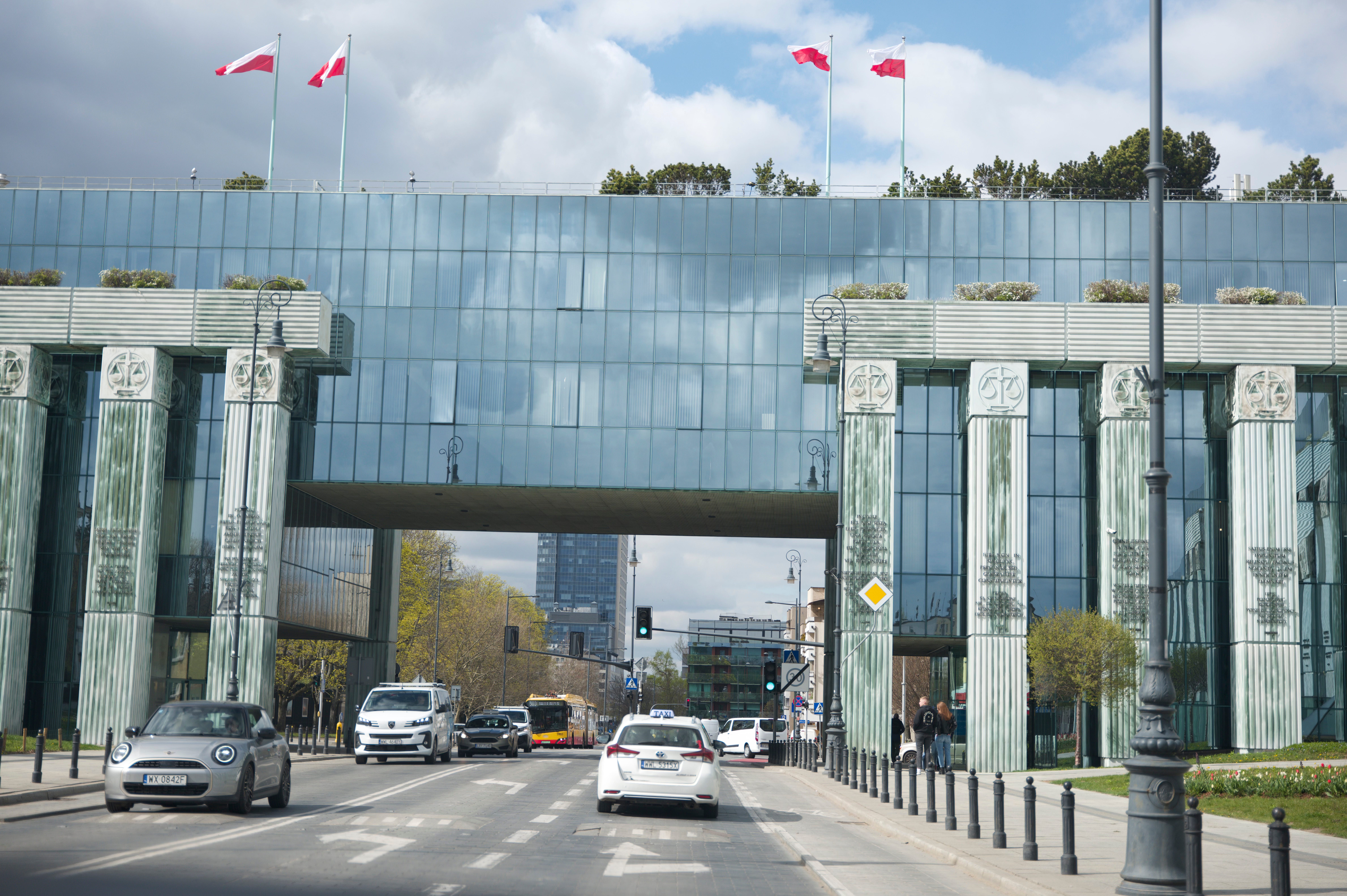
by Zofia Jastrun